Original source[Skip to content](https://www.warhol.org/timecapsule/andy-warhols-time-capsule-21/time-capsule-21-artwork/#main)
Visit
What's On
Andy Warhol
Learn
[Today’s hours 10 a.m. – 5 p.m.](https://www.warhol.org/museum-admission/)
SearchSearchSearch
Visit
Close
What's On
Close
Andy Warhol
Close
Learn
Close
About
Close
Search
SearchSearch
Close
# Time Capsule 21: Artwork
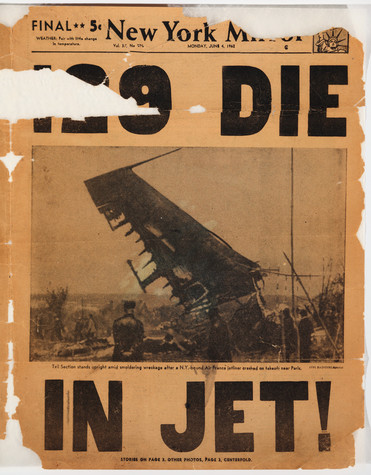
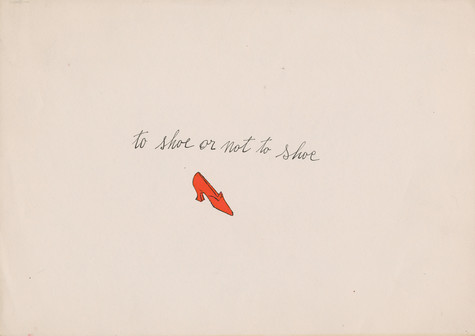
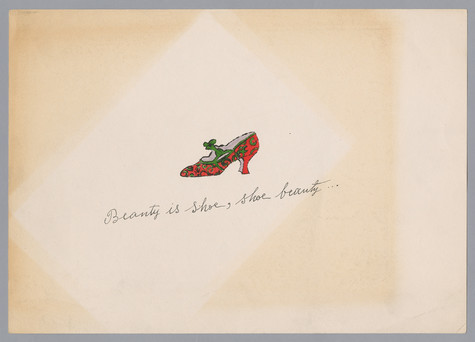
Time Capsule 21 is striking in the large amount of Andy Warhol’s art and source material it contains from the 1950s and 1960s. There are three hand-colored prints of shoes from his self-published promotional portfolio titled A la Recherche du Shoe Perdue. There are also 204 individual photobooth strips, magazines, and several album covers created by Andy Warhol. Source material for Warhol’s art includes: photographs of Yoyo Bischofberger, Ethel Scull, actor Tom Courtenay, filmmakers Marie Menken and Willard Maas; a paint-by-number still life of a violin and apples; and the original newspaper headline for his artwork 129 Die in Jet!
## 129 Die In Jet!
[\\
\\
, opens new tab](https://www.warhol.org/wp-content/uploads/2019/05/TC21-1_int_01-Web-Ready-475px-longest-edge-Check-Copyright-Before-Using-on-Web.jpg)
### _TC21_ Object: Newspaper headline "129 Die in Jet," from New York Mirror, June 4, 1962
Andy Warhol was an avid newspaper reader. Blazoned headlines, quirky stories, celebrity gossip, comics, and gory details all captured his attention. The Time Capsules often feature assorted newspaper clippings that intrigued him. Many of these highlight bizarre deaths, freak accidents, or crimes committed by ordinary people. In this particular newspaper clipping from the June 4th, 1962 New York Mirror, the headline reads “129 Die in Jet!” and includes a large image of the crash. Warhol collected and used newspapers, especially the front pages, to model and inform some of his most important works of art.
[\\
\\
, opens new tab](https://www.warhol.org/wp-content/uploads/2019/05/129_Die_Jet_Warhol.jpg)
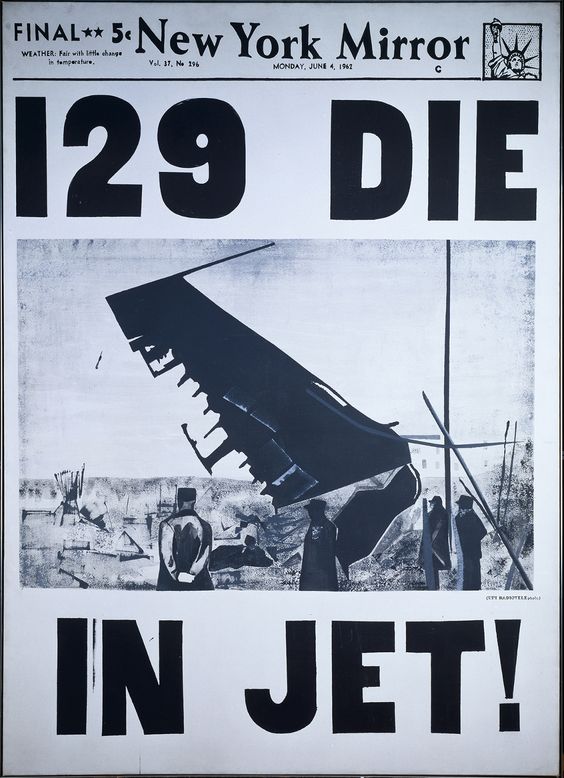
### Related Artwork: Andy Warhol, _129 Die in Jet_, 1962
This painting builds upon the New York Mirror’s coverage of a plane crash at Orly Airport in Paris in 1962. Warhol enlarges the already imposing headline and photograph of the tattered wreckage on a massive 100-by 72-inch canvas. Warhol made four newspaper-headline paintings between 1961 and 1962. These were part of the larger Death and Disaster series that included newspaper imagery, and crime-scene police photography.
[\\
\\
Andy Warhol, Skull, 1976\\
\\
The Andy Warhol Museum, Pittsburgh; Founding Collection, Contribution Dia Center for the Arts\\
\\
© The Andy Warhol Foundation for the Visual Arts, Inc.\\
\\
2002.4.24\\
\\
, opens new tab](https://www.warhol.org/wp-content/uploads/2017/03/2002-4-24_pub_01-Web-Ready-475px-longest-edge-Check-Copyright-Before-Using-on-Web.jpg)
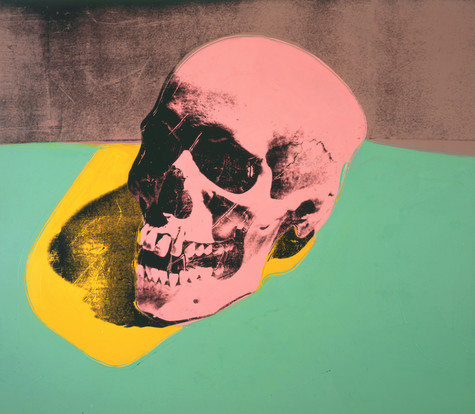
Andy Warhol, Skull, 1976
The Andy Warhol Museum, Pittsburgh; Founding Collection, Contribution Dia Center for the Arts
© The Andy Warhol Foundation for the Visual Arts, Inc.
2002.4.24
### Related Artwork: Andy Warhol, _Skull_, 1976
Similar to his Death and Disaster series, Skulls represent an important shift in Warhol’s work, possibly influenced by being critically shot in 1968, an event which profoundly affected his life and art. Historically in art, the human skull represented the theme “vanitas” knows as mortality or the shortness of life. It suggested that the skull is simply a motif; a part of Warhol’s desire to evoke the human condition. Working with assistants thought out his career, Warhol was able to create multiple prints of a similar subject.
Slide number:
1 / 1
Carousel controls:
Previous Slide
Next Slide
> It was Henry who gave me the idea to start the Death and Disaster series. We were having lunch one day in summer… and he laid the Daily News out on the table. The headline was ‘129 DIE IN JET!’ And that’s what started me on the death series, the Car Crashes, the disasters, the Electric Chairs.
## Self-Portrait Photobooth
[\\
\\
, opens new tab](https://www.warhol.org/wp-content/uploads/2019/06/TC21-73-194_int_01-Web_Ready_475px_longest_edge_-_Check_Copyright_Before_Using_on_Web.jpg)
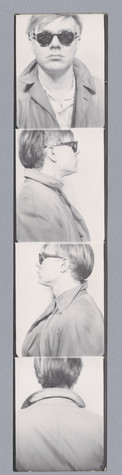
### _TC21_ Object: Andy Warhol, _Self-Portrait_, 1963
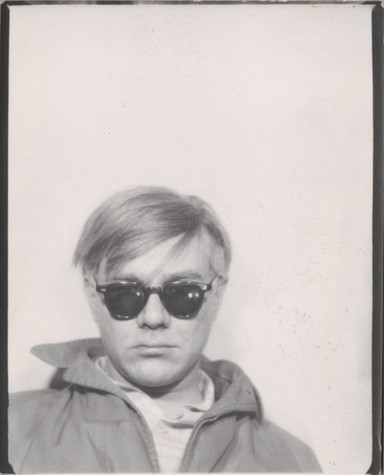
There are a total of 204 original photo booth strips in TC21. Many of these portrait photos were commissioned to illustrate a feature in the June 1963 issue of Harper’s Bazaar, titled “New Faces, New Forces, New Names in the Arts.” The article’s subjects included architects, painters, writers, actors, dancers, composers, curators, and performers.
[\\
\\
, opens new tab](https://www.warhol.org/wp-content/uploads/2019/05/TC21-73-192_pub_01-Web-Ready-475px-longest-edge-Check-Copyright-Before-Using-on-Web.jpg)
### _TC21_ Object: Andy Warhol, _Self-Portrait_, 1963
Andy Warhol liked the simple and quick technology of the photo booth and used these strips to create many portraits, including portraits of himself. Warhol also used photo booth images to create silkscreen portraits of socialites Ethel Scull and Judith Green, and actor Bobby Short.
[\\
\\
, opens new tab](https://www.warhol.org/wp-content/uploads/2016/12/1998-1-810_pub_01-Web-Ready-475px-longest-edge-Check-Copyright-Before-Using-on-Web.jpg)
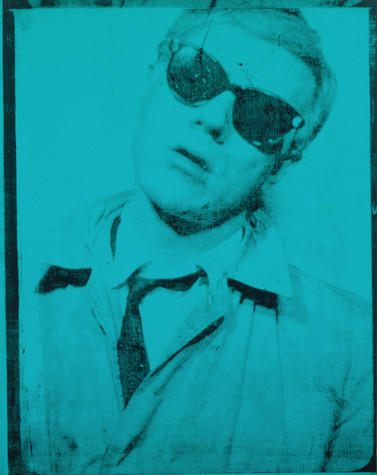
### Related Artwork: Andy Warhol, _Self-Portrait_, 1963-1964
The original photo found in TC21 was made into a silkscreen and then printed onto canvas painted turquoise blue. Warhol included the dark black crop marks of the original photo as a nod to the photo booth’s unique way of printing photos.
Slide number:
1 / 1
Carousel controls:
Previous Slide
Next Slide
> When I did my self-portrait, I left all the pimples out because you always should. Pimples are a temporary condition and they don’t have anything to do with what you really look like. Always omit the blemishes—they’re not part of the good picture you want.
## Ethel Scull Photobooth
[\\
\\
, opens new tab](https://www.warhol.org/wp-content/uploads/2019/05/TC21-73-25_int_02-Web-Ready-475px-longest-edge-Check-Copyright-Before-Using-on-Web.jpg)
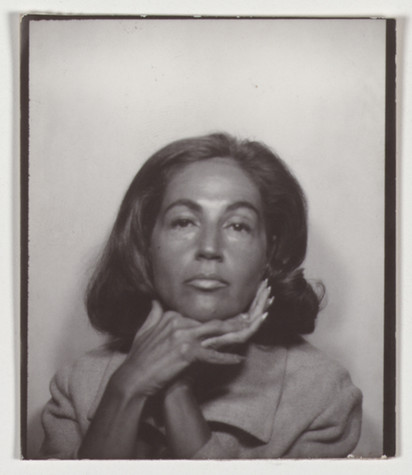
### _TC21_ Object: Andy Warhol, _Ethel Scull_ , 1963
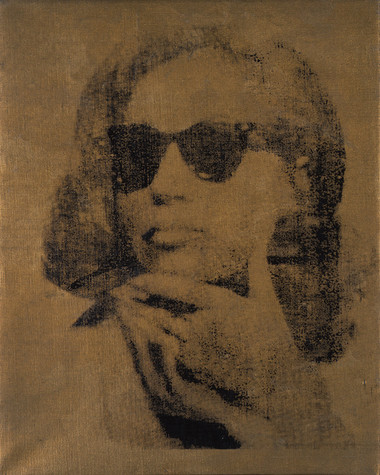
Ethel Scull and her husband, Robert, were early and important collectors of Pop Art. In mid-1963, Robert Scull asked Warhol to paint a portrait of his wife. The resulting work is one of his earliest commissioned portraits, as well as one of his first to use photo booth photographs as the source image.
[\\
\\
, opens new tab](https://www.warhol.org/wp-content/uploads/2019/05/TC21-73-24_int_01-Web-Ready-475px-longest-edge-Check-Copyright-Before-Using-on-Web.jpg)
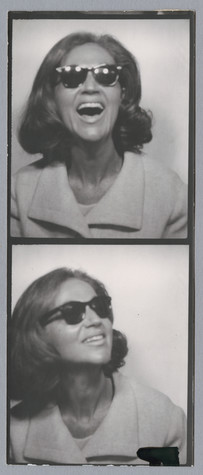
### _TC21_ Object: Andy Warhol, _Ethel Scull_ , 1963
Warhol started painting commissioned portraits in the early 1960s. These works developed into a significant aspect of his career and were a main source of his income in the 1970s. Many of his subjects were well known in international social circles, the art world, and the entertainment industry at the time.
[\\
\\
, opens new tab](https://www.warhol.org/wp-content/uploads/2019/05/1998-1-61_pub_01-Web-Ready-475px-longest-edge-Check-Copyright-Before-Using-on-Web.jpg)
### Related Artwork: Andy Warhol, _Ethel Scull_ , 1963
He came up for me that day and he said, ‘All right, we’re off.’ And I said, ‘Well, where are we going?’ ‘Just down to Forty-second and Broadway.’ I said, ‘For what?’ He said, ‘For the portrait.’ I said, ‘In those things? My God, I’ll look terrible!’ He said, ‘Don’t worry,’ and he took out the coins. He had about a hundred dollars’ worth of silver coins, and he said, ‘We’ll take the high key and the low key, and I’ll push you inside, and you watch the little red light.’ At the end of the thing, he said, ‘Now, you want to see them?’ And they were so sensational… I was so pleased. I think I’ll go there for all my pictures from now on.
—Ethel Scull, Painters Painting: A Candid History of the Modern Art Scene, 1940-1970, 1984
Slide number:
1 / 1
Carousel controls:
Previous Slide
Next Slide
## Screen Test: Ethel Scull \[ST303\] (1964)
Andy Warhol
_Screen Test: Ethel Scull_ \[ST303\] (1964)
16mm film, black and white, silent, 4 minutes at 16 frames per second
Gift of the Andy Warhol Foundation for the Visual Arts, Inc., 1997
©2019 The Andy Warhol Museum, Pittsburgh, PA, a museum of Carnegie Institute. All rights reserved. Reproduction or downloading is prohibited.
## Newspaper Comics
[\\
\\
, opens new tab](https://www.warhol.org/wp-content/uploads/2019/05/TC21-38_int_01-Web-Ready-475px-longest-edge-Check-Copyright-Before-Using-on-Web.jpg)
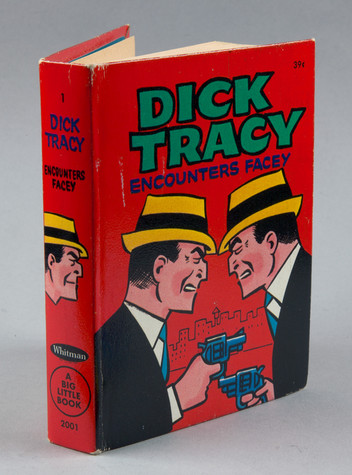
### TC21 Object: Dick Tracey Encounters Facey/A Big Little Book No. 2001, 1967 , 1963.
Andy Warhol was a huge comic book fan, and collected comic books and related paraphernalia throughout his life. He transformed these unlikely bits of ephemera into fine art. Prime sources for his artwork were magazine ads, newspaper photos, comics, and the Picture Collection of the New York Public Library.
[\\
\\
, opens new tab](https://www.warhol.org/wp-content/uploads/2019/05/TC21-75_int_01-Web-Ready-475px-longest-edge-Check-Copyright-Before-Using-on-Web.jpg)
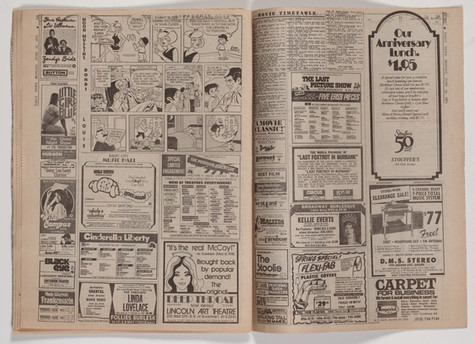
### _TC21_ Object: _Daily News_, New York Daily News, Monday, June 10, 1974
Warhol enjoyed reading the daily comics and would often collect them from various newspapers to use as source material for later works.
[\\
\\
, opens new tab](https://www.warhol.org/wp-content/uploads/2019/06/Bonwit_color.jpg)
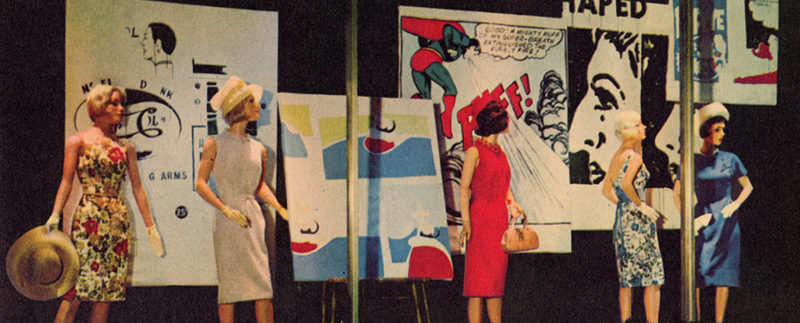
### Related Artwork: Andy Warhol, Bonwit Teller Window Display, 1961
In order to create large scale paintings for window displays, Warhol would use his opaque projector to create an enlarged version of the original comic. After tracing the shapes in pencil, he would then paint in the shapes by hand. It was not long after he completed these early hand-painted canvases that he began using photographic silkscreens to create his artwork.
[\\
\\
, opens new tab](https://www.warhol.org/wp-content/uploads/2019/06/1998-1-2452-3_pub_01-Web-Ready-475px-longest-edge-Check-Copyright-Before-Using-on-Web.jpg)
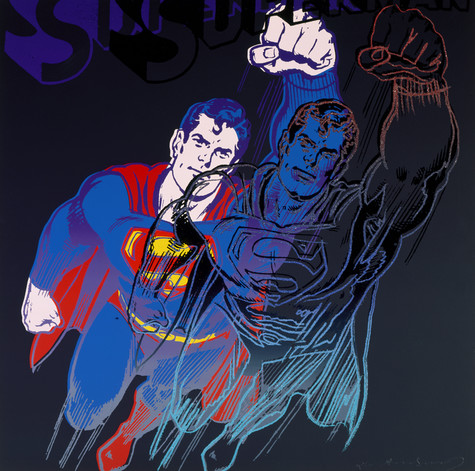
### Related Artwork: Andy Warhol, _Myths: Superman_, 1981
Warhol’s fascination with Superman stems from his childhood when he was diagnosed with an immobilizing sickness and spent the majority of his time reading comic books and movie magazines. He was so preoccupied by his physical appearance, constant ailments, anxiety and insecurities that he found great appeal in the transformation of Clark Kent into Superman.
Slide number:
1 / 2
Carousel controls:
Previous Slide
Next Slide
## Jackie Kennedy
[\\
\\
, opens new tab](https://www.warhol.org/wp-content/uploads/2019/06/TC21-94_int_01-Web-Ready-475px-longest-edge-Check-Copyright-Before-Using-on-Web.jpg)
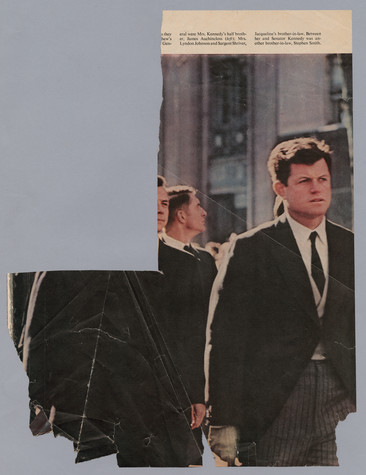
### _TC21_ Object: Magazine clipping, (possibly from _Life_ magazine ), 1963
This clipping from Life magazine depicts Jackie Kennedy (photo cut out) and Robert Kennedy in John F. Kennedy’s funeral procession. Deeply affected by the assassination of President John F. Kennedy in November 1963, Warhol began a large series of portraits of Kennedy’s widow, Jacqueline Kennedy.
[\\
\\
, opens new tab](https://www.warhol.org/wp-content/uploads/2019/06/1998-1-2290_pub_01-Web-Ready-475px-longest-edge-Check-Copyright-Before-Using-on-Web.jpg)
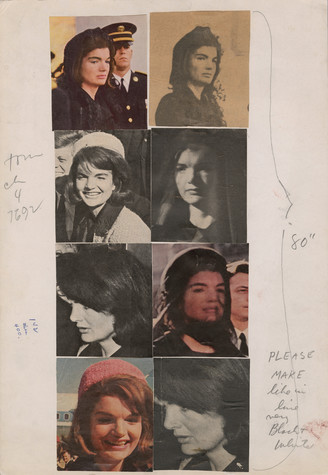
### Related Artwork: Andy Warhol, source for _Jackie_ series), 1963-64
To create his Jackie series, Warhol used source images such as these, taken from newspapers and magazines. These portraits were exhibited individually or in a grouping.
[\\
\\
, opens new tab](https://www.warhol.org/wp-content/uploads/2016/12/EX_RR_20100826_Jackies_0001.jpg)
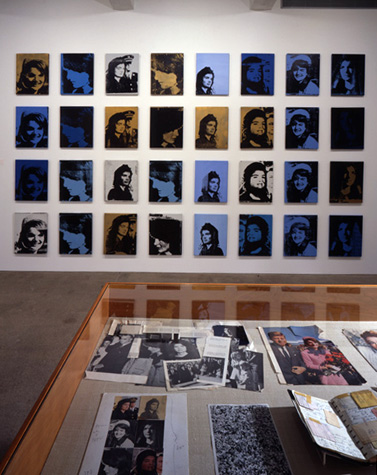
### Related Artwork: Installation of Andy Warhol's Jackie series and related source material
Warhol’s isolation and repetition of Jackie’s image suggest both the solitary widow and the collective experience of the witnessing nation. Commentators have remarked that it was during this time that television became a unifying force, assuming a new role in defining national consciousness. Warhol’s multiplied images offer the viewer an obsessive reenactment of this central event in United States history.
Slide number:
1 / 1
Carousel controls:
Previous Slide
Next Slide
## Mao
[\\
\\
, opens new tab](https://www.warhol.org/wp-content/uploads/2019/06/TC21-99_int_01-Web-Ready-475px-longest-edge-Check-Copyright-Before-Using-on-Web.jpg)
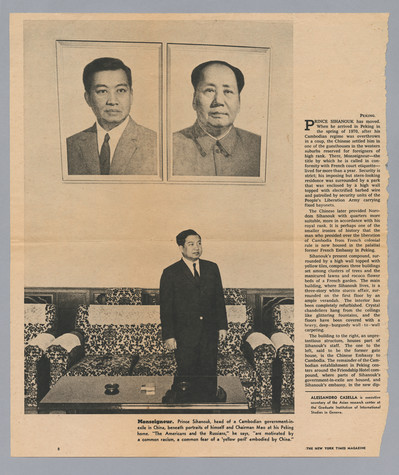
### _TC21_ Object: _The New York Times_, January 23, 1972, (Prince Sihanouk standing beneath portraits of himself and Chairman Mao)
Warhol visited China in 1982, but his interest in Mao Tse-tung began ten years earlier as evidenced by this newspaper clipping found in TC21. This official photo of China’s revolutionary leader could be seen in farm fields, homes, businesses, and government buildings throughout China, and as the frontispiece portrait in Mao’s famous Little Red Book.
[\\
\\
, opens new tab](https://www.warhol.org/wp-content/uploads/2019/06/1998-1-2401-2_pub_01-Web-Ready-475px-longest-edge-Check-Copyright-Before-Using-on-Web.jpg)
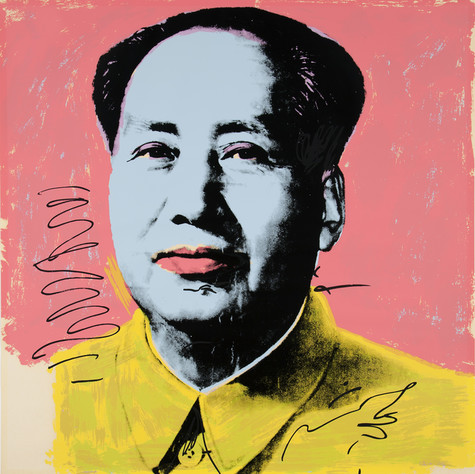
### Related Artwork: Andy Warhol, _Mao_, 1972
To Warhol, Mao’s ubiquity may have seemed akin to that of Coca-Cola advertising campaigns, which urged everyone to consume the product. Warhol made dozens of paintings of Mao, as well as an edition of prints, and wallpaper. Unlike many of Warhol’s paintings of the 1960s, which display very delineated areas of color, the Mao paintings and other 1970s works are more painterly in style, showing a mixture of colors in the brushwork.
[\\
\\
, opens new tab](https://www.warhol.org/wp-content/uploads/2016/04/Abby-Warhola-2014-Floor-4-Gallery-Rehang-Mao_social.jpg)
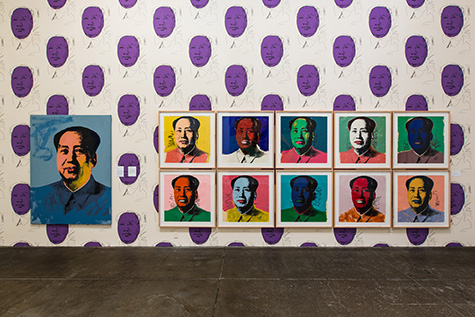
### Related Artwork: _Mao_ installation, The Andy Warhol Museum
Warhol’s multiple interpretations of Chairman Mao can be seen in this gallery installation. His hand painted, photographic silkscreen portraits are exhibited on top of his repeated, stylized line-drawing of Mao with a purple face on wallpaper. Warhol’s iconic image of Mao outwardly translates this powerful, mysterious and somewhat intimidating image of Communist propaganda into a glamorized 1970s ready-made pop icon.
Slide number:
1 / 1
Carousel controls:
Previous Slide
Next Slide
## Factory Diary: Andy Paints Mao, December 7, 1972
Andy Warhol
_Factory Diary: Andy Paints Mao,(/em> December 7, 1972_
_½” reel-to-reel videotape, black and white, sound, 32 minutes, camera by Michael Netter_
_With Andy Warhol, Jed Johnson._
_Gift of the Andy Warhol Foundation for the Visual Arts, Inc., 1997_
_©2019 The Andy Warhol Museum, Pittsburgh, PA, a museum of Carnegie Institute. All rights reserved. Reproduction or downloading is prohibited._
_## Shoe Drawings_
_[\_\
_\_\
_, opens new tab](https://www.warhol.org/wp-content/uploads/2019/06/TC21-117-3_int_01-Web-Ready-475px-longest-edge-Check-Copyright-Before-Using-on-Web.jpg)_
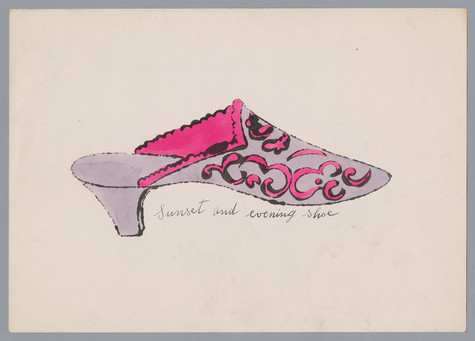
_### _TC21_ Object: Andy Warhol, Julia Warhola, from Andy Warhol's self-published book _A la Recherche du Shoe Perdu_, 1955_
_There are three hand-colored prints of shoes in TC21 from Warhol’s self-published promotional portfolio titled A la Recherche du Shoe Perdue. This portfolio contains thirteen plates, each accompanied by a quirky one-line “shoe poem” written by Warhol’s friend, Ralph Pomeroy, and calligraphed by Julia Warhola, Andy’s mother._
_[\_\
_\_\
_, opens new tab](https://www.warhol.org/wp-content/uploads/2019/06/TC21-117-2_pub_01-Web-Ready-475px-longest-edge-Check-Copyright-Before-Using-on-Web.jpg)_
_### _TC21_ Object: Andy Warhol, Julia Warhola, from Andy Warhol's self-published book _A la Recherche du Shoe Perdu_, 1955_
_Other versions of the portfolio have completely different color schemes due to Warhol’s “coloring parties.” For both his commercial and personal projects, Warhol would often create multiple copies of an image and invite his friends over to help add color using Dr. Martin’s Aniline dyes. Sometimes Warhol would give instructions as to what color should be added where, but other times he would let his guests fill in the outlines organically._
_[\_\
_\_\
_, opens new tab](https://www.warhol.org/wp-content/uploads/2019/06/TC21-117-1_int_01-Web-Ready-475px-longest-edge-Check-Copyright-Before-Using-on-Web.jpg)_
_### _TC21_ Object: Andy Warhol, Julia Warhola, from Andy Warhol's self-published book _A la Recherche du Shoe Perdu_, 1955_
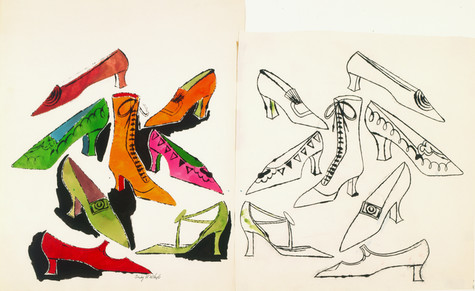
_Between 1955 and 1957, Warhol was the sole illustrator for shoe manufacturer I. Miller Shoes and made new drawings of shoes each week for ads in The New York Times. The title is a riff on Marcel Proust’s famous novel À la recherche du temps perdu (In Search of Lost Time, or Remembrance of Things Past)._
_[\_\
_\_\
_, opens new tab](https://www.warhol.org/wp-content/uploads/2017/05/1998-1-1045_pub_01-Web-Ready-475px-longest-edge-Check-Copyright-Before-Using-on-Web.jpg)_
_### Related Artwork: Andy Warhol, _Eight Shoes_, 1950s_
_Warhol used a special type of line drawing, the [blotted line technique, opens new tab](https://www.youtube.com/watch?v=laOLC2eYZRM), to great effect in his commercial art of the 1950s. This technique allowed him to quickly create a variety of illustrations along a similar theme. Warhol often colored his blotted line drawings with watercolor dyes or applied gold leaf._
_Slide number:_
_1 / 2_
_Carousel controls:_
_Previous Slide_
_Next Slide_
Download thumbnail 1Download Source media 2 